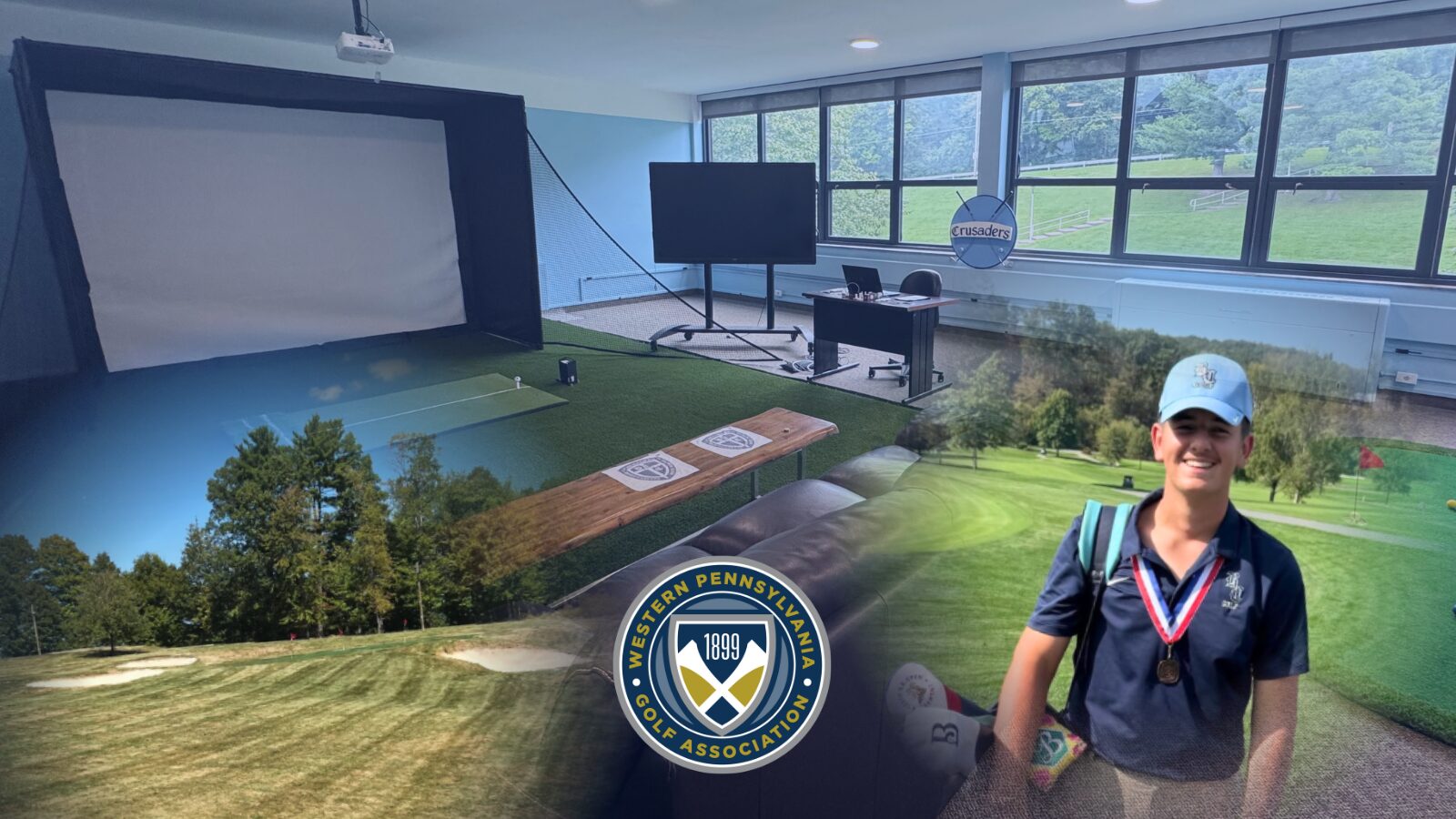
Jamin Brock is one of the top high school golfers in the region, having clinched a spot in the PIAA Class AA state tournament a year ago.
But Brock — like so many others — didn’t have a deep-seated interest in playing the game competitively until just a few years ago.
Now, the senior at Bishop Canevin has found a sport to dedicate his time and efforts to. It’s one that he hopes leads to an opportunity to play at the next level. And it’s one that is being recognized and supported by his school and community.
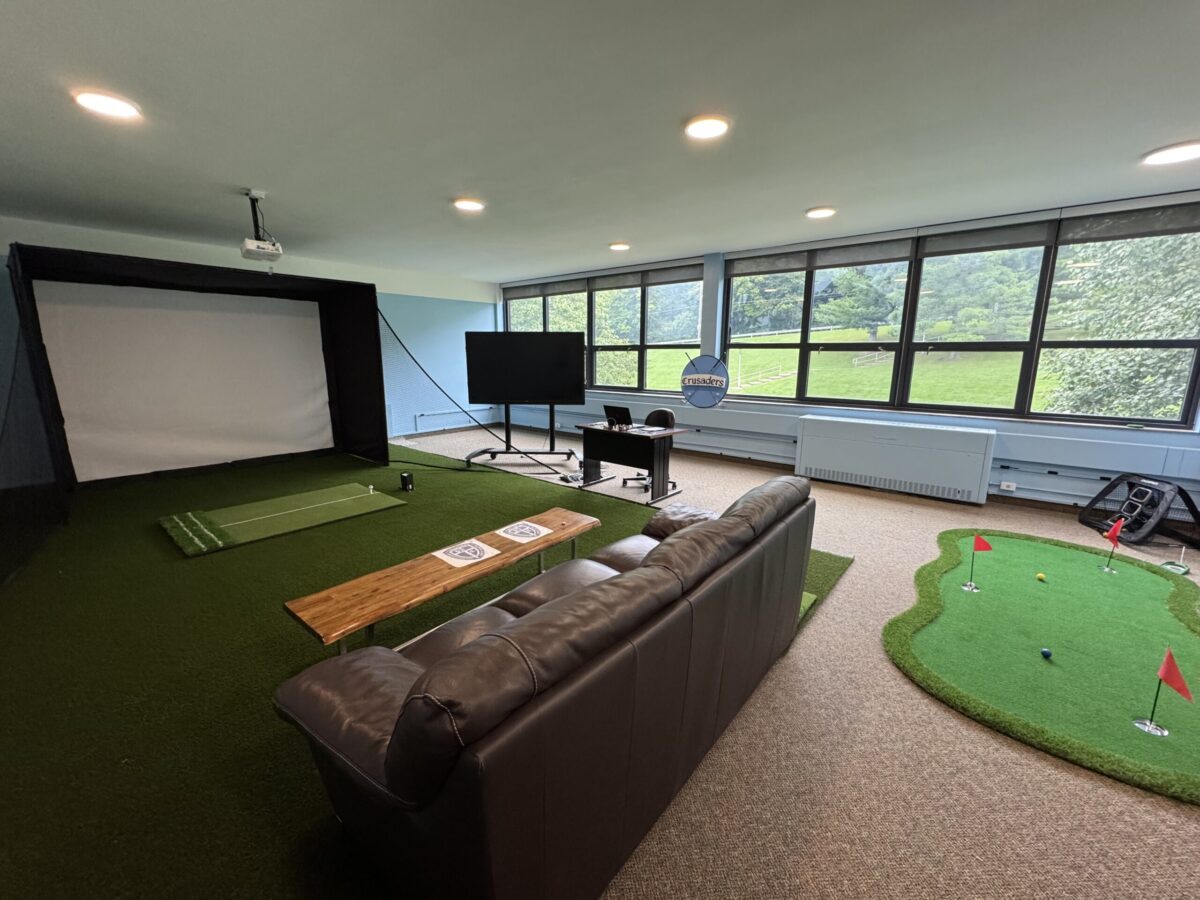
Bishop Canevin has recently unveiled a new golf training center at its high school — a large room featuring a golf simulator bay, putting green and other tools to help the program’s golfers reach their potential.
“There’s just an ease in being able to go practice now,” says Brock. “Anyone can hit balls into a net, but now we have the ability to see what we’re doing, to see the numbers. The ability to go and practice in a climate-controlled area at the school… it’s just awesome.”
Brock’s coach, David Ellis, has seen firsthand how extended practice has helped his top player and how it can help those with far less experience in the game, but who may have curiosity in the growing sport.
“This simulator is a big draw for us,” says Ellis, in his fourth year as Bishop Canevin’s head coach. “We had five players and were struggling to get more. We put in the simulator and, all of a sudden, I have ten golfers show up. They come in and ask, ‘how good do I have to be to play?’ We say, ‘come in, we’ll develop you.’”
And Bishop Canevin isn’t alone. Throughout Western Pennsylvania, the rising interest in the game of golf is being felt and bolstered at the high school ranks.
From the development of new teams to technological support to financial backing and new competitive experiences for high school players, there has, without question, never been a more exciting time for young athletes in the region to commit to the sport.
Overcoming obstacles
Traditionally, golf in the Northeast region of the country has been limited by one adversity above all others — weather.
The inability to go out and play competitive golf or, at times, to even swing a club during certain months of the year, has held players back from reaching the potential that other golfers can in warmer climates.
Thanks to developing technology and investments being made into the region’s players, that gap may be starting to shrink. But it takes leadership, initiative and community engagement to get there. And that’s something that Bishop Canevin has with its golf program.
“Coming into Bishop Canevin, I was trying to identify ways that we could grow, and grow in a certain way,” says Brian Fernandes, President of Bishop Canevin, who joined the school just over a year ago. “I want to make sure that our population is strong academically, socially and athletically. Golf does all of those things. There’s so much math and physics in golf. And, in life, so many important decisions in business happen on a golf course.”
It also requires internal investment and, at times, a bit of charity. Bishop Canevin relied on the generous support from a golf-loving donor to support their efforts. Fernandes, who understands the fortune of that support, hopes that they can help set a standard for other schools to copy or strive for and that Bishop Canevin may inspire others to follow their lead.
“We’re Catholics, so we want to help everybody,” he says. “I’m not going to turn anyone away who wants to see what we’re doing. The growth of the sport is important all-around. Some kids don’t have the resources, but we’ll make our facility available for people to come and use it. We’re going to try to run programs and have youth camps. We want them to learn the game the right way.”
The ‘cool’ factor
Golf’s rising popularity, in large part, has been fueled by the ability to play the game during the COVID-19 pandemic in 2020 and 2021.
While other athletic outlets were shuttered, golf in many areas was able to power on, opening the door for the game to grow.
National and local numbers support that, as nearly 50 million Americans are projected to play some variety of golf in 2026. Traditional golf courses, driving ranges, simulators and golf entertainment venues aid those numbers.
But, beyond the COVID factor, the rise in golf content via social and digital media has become a significant recruitment tool to get youth golfers interested in the game. YouTube, TikTok, Instagram and Twitter have turned into just as much of an industry-leading asset as anything.
Multi-million-dollar and even billion-dollar golf content and apparel companies have blossomed over the last five years, ushering in a ‘cool factor’ for youth golfers — something that used to only boost more conventional sports.
“In the past, golf was sort of viewed as the corny sport to play in high school,” says Brock with a laugh. “But now, you see guys like Grant Horvat or the Bryan brothers and people like that. It shows that the game has gotten cooler. And it’s not just playing golf that’s cool. It’s playing good golf.
“There have always been teenagers who would go hack up a course or go to the driving range to have a good time. But they weren’t trying to play good golf. You were viewed as weird if you were too serious about golf. Now though, you can be serious. You can try to get better. And it’s cool.”
It’s also convincing athletes to home in on golf instead of dividing their time or putting the sport on the back burner until the weather improves.
“Whenever I was in high school, just being a golfer typically wasn't the popular thing,” says Alec Stopperich, the 2024 WPGA Open champion and 2016 Peters Township graduate. “You were always playing other sports. Now, with how competitive golf is, if you really want to go do that, you're going to have to put all your time and attention to golf.
“I think that the level of play for the high schoolers and the kids that are in college now, it's shown that the interest in golf at that age is now as high as it's ever been. It's pretty cool to see.”
That’s not to say that multi-sport athletes, including those playing golf, are unheard of or shouldn’t exist. Austin Malley, another Peters Township alum, currently plays both hockey and golf at John Carrol University. Ty Hartman, one of the top high school golfers in the region, is an accomplished hockey player at Thomas Jefferson. Two-time defending WPGA Women’s Mid-Amateur champion Katie Miller Gee, a 2003 Hempfield graduate, lettered in track and basketball for the Spartans while also earning a scholarship to play golf at North Carolina.
Many others who excel on the golf course play other sports throughout the school year. But there does appear to be a clear benefit for those willing and able to practice golf year-round.
“I was always a baseball player and never gave much thought to competitive golf through middle school,” says Brock. “But one summer I decided to make a change and was like, ‘okay, I’m really going to try to play golf.’ I started playing, played almost every day and contributed my freshman year. Since then, it’s been my life.”
West Penn producing winners
The high school golf season got into full swing last week, with an quick-growing landscape full of strong players, like Brock, who will vie for WPIAL and PIAA titles.
The expansion in high school golf has been evident over the last two decades. While the number of boys teams playing in the WPIAL has had some fluctuation, the participation within the teams has grown and the caliber of play among boys’ teams has increased nicely.
On the girls’ side, however, there has been not only an increase in participation and strength of play, but a drastic jump in the amount of girls golf teams competing in the district, according to David Kuhn, the co-chair of the WPIAL golf steering committee and the head coach of Peters Township’s boys program.
“We have just about doubled the amount of girls teams that we had 20 years ago,” says Kuhn, noting the increase from 24 to 45 teams during that time. “Girls golf has grown exponentially.”
A major factor in that has been the WPIAL’s push for more schools to back girls golf programs instead of having girls play as a part of the boys program. Having their own team and own team competitions has allowed girls golf to flourish in the region. And more teams could very well be on the way.
The growth in local participation and strength of play — for both boys and girls — is leading to championships.
A boy from the WPIAL has won the PIAA AAA state title the last three years, with Fox Chapel’s Carson Kittsley claiming the last two, following Butler’s Hunter Swidzinski in 2023. Kittsley is committed to Penn State, while Swidzinski plays at UNC Wilmington. Elizabeth Forward grad Mya Morgan, now playing at Central Michigan, claimed the 2024 and 2025 Girls AAA individual titles and the last three Girls AA championships have been won by players in the western half of the state.
“One of our goals since I joined the steering committee in 2004 was to make WPIAL golf more competitive and ensure that we have the best chance of getting our best players into our championships and giving them the best chance to get to the state championship,” says Kuhn. “I think the successes of our individuals and teams over the last ten years speaks for itself.”

Even the smaller investments have paid dividends.
“I notice little things,” says Kuhn. “When I first bought golf bags for my team over 20 years ago, almost no one had team golf bags. Now, almost every team has bags. You’d play schools who wouldn’t have matching shirts on. Now, they have matching shirts, belts, hats and some even have shoes.
“You wouldn’t see a football team or a basketball team show up at a game, or a soccer team come to a match, not in full uniform. Now, you’re seeing that with golf. Those investments are making golf a big deal. Those kids see those things and think, ‘hey, this is special, I’m on the golf team.’”
What the future looks like for high school golf
While high school golf continues its rise, it also faces a new set of challenges.
First, the number of boys golf teams, particularly in lower-income communities in Western Pennsylvania, has fallen off just a bit in recent years. Rising costs in the game play a role in that. And there is also the issue of space.
Ten years ago, clubs and courses were far more willing to take on high school and college teams for practice and competitions. With increased play and memberships up significantly, finding openings is becoming more of a challenge for both the schools and the clubs.
“Their members come first,” says Kuhn, who does have the benefit of a tremendous golf training facility at Peters Township High School, which he believes to be the only one of its kind at a public school in the country. “It’s understandable for these clubs. They only have so much space.”
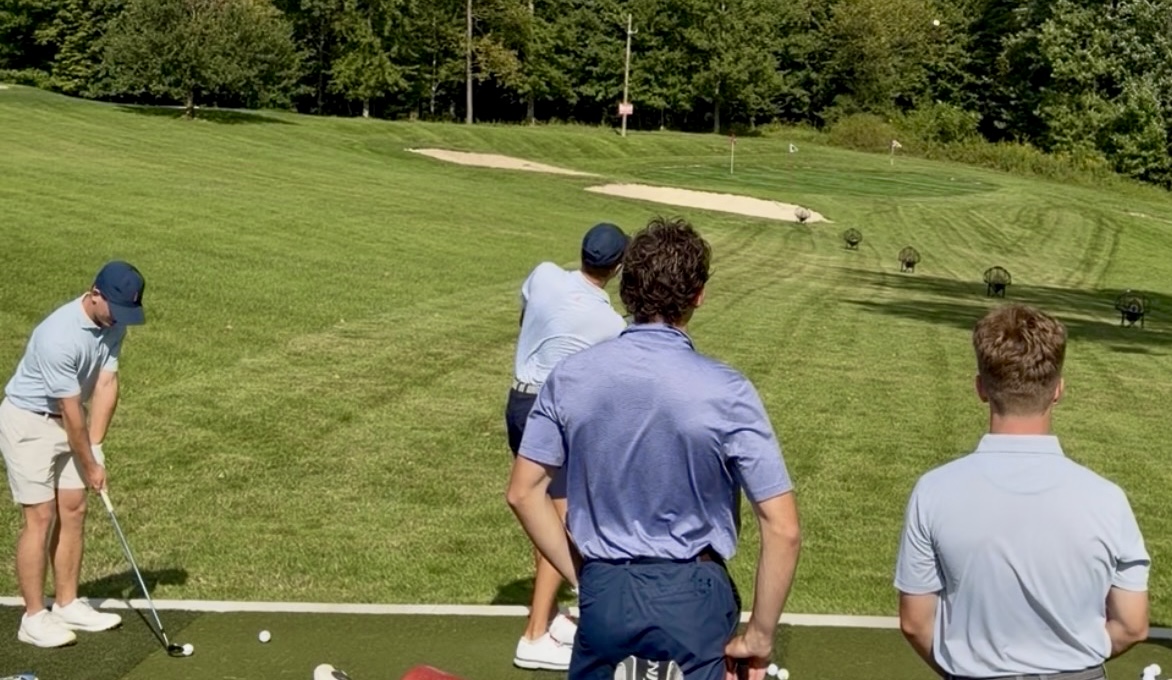
Bishop Canevin has an agreement with Chartiers Country Club to serve as its home club. Peters Township, which has claimed state championships in both boys and girls golf in recent years, utilizes Valley Brook Country Club. Leadership from both schools are extremely grateful to have such support from local clubs, which see the value in investing in the future of the game by allowing young players to have a high-end experience.
From a cost standpoint, efforts from organizations like Youth on Course, which offer kids $5 rounds of golf at select courses, and a variety of initiatives from the USGA and other leading golf entities are working to offset those blockades. Locally, the WPGA helps in a variety of ways, including its support of Team Pennsylvania, a faction of the United States National Development Program.
These aids are done so with a hope that the boom in golf becomes more than just a boom, that it becomes a sustained segment of the academic experience, of business and of life in general. For good.
While competitive golf is growing, the game as a whole is as well. And beyond the birdies, championship medals and scholarships, golf’s global impact is viewed much deeper.
“Mentally, golf is huge for life,” says Brock. “There’s no other sport where you play and need to control your mind like golf. You can learn so much from the golf course, including how to deal with failure. You’ll fail at it, no matter how good you are. The mental strength you gain by pushing through failure is great.”